 English
 Español
Just write us your request & we will take care of the rest.
Flange Bolts Play a Central Role in Mechanical Stability
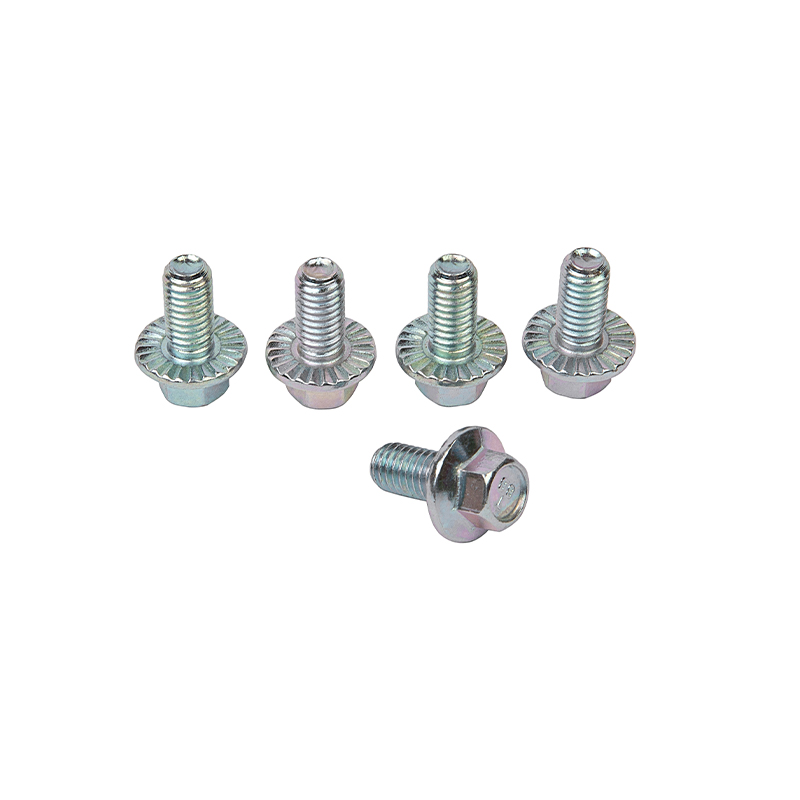
Flange bolts, a staple in industrial and mechanical assemblies, are designed to combine fastening strength with ease of installation. Unlike standard bolts, flange bolts feature a widened base that distributes clamping force more evenly, reducing the likelihood of material damage during tightening. Their production involves meticulous attention to material selection, dimensional accuracy, and surface finishing to ensure both performance and durability.
Manufacturing begins with high-grade steel or alloy rods that are cut to specific lengths. The rods then undergo cold forging, a process that increases their tensile strength while maintaining precise shape tolerances. Cold forging involves pressing the rod into a die at room temperature, producing bolts with consistent dimensions and minimal waste. Following this, threading machines create the helical grooves, which must align precisely with matching nuts to provide secure fastening without slippage. Some factories employ automated threading systems combined with optical sensors to maintain uniformity across large batches.
Surface treatment is another critical step. Flange bolts often receive coatings such as zinc plating, phosphate, or specialized anti-corrosion layers. These treatments not only prevent rust but also reduce friction during installation, making it easier for operators to achieve proper torque. Advanced factories incorporate robotic spray systems that ensure even coating and minimal environmental exposure, which helps maintain consistent quality across thousands of bolts per day.
The practical use of flange bolts extends to diverse industries. In automotive manufacturing, flange bolts secure engine components and chassis parts, where consistent clamping pressure is essential to maintain alignment under vibration and thermal expansion. In industrial equipment, these bolts anchor motors, pumps, and structural elements, offering both reliability and ease of replacement. The flange design also minimizes the need for washers, simplifying assembly and saving production time.
Innovation in flange bolt production continues to enhance usability. Some designs incorporate serrated faces to prevent loosening under vibration, while others use precision-engineered threads to reduce the risk of galling. Manufacturers have optimized heat treatments to balance hardness with toughness, ensuring that bolts can withstand high stress without brittle failure.
Flange bolts are increasingly integrated into modular construction systems and prefabricated machinery. Their ability to provide uniform clamping pressure allows engineers to assemble complex structures quickly and with confidence in long-term stability. Specialized flange bolts, such as those with high-strength alloys or unique surface finishes, extend usability to heavy-duty industrial scenarios where both vibration resistance and dimensional stability are crucial.
Modern production facilities are also exploring adaptive quality control systems. High-resolution optical scanners and digital imaging track thread consistency, flange flatness, and surface integrity across entire batches. Engineers consider flange bolt selection not only in relation to static loads but also dynamic and cyclic forces, tailoring specifications to vibration-heavy machinery, rotating assemblies, and high-temperature environments. This level of precision helps prevent structural fatigue and unplanned downtime in demanding industrial settings.
The versatility of flange bolts extends to specialty machinery and custom fabrication projects. They are often chosen for experimental setups, testing rigs, and industrial prototypes where adjustable clamping and repeatable performance are essential. Their capacity to maintain consistent alignment under repeated assembly and disassembly demonstrates the intersection of mechanical engineering principles and practical usability.
Despite their technical sophistication, flange bolts remain accessible and versatile components. Engineers select them based on load requirements, material compatibility, and environmental conditions, demonstrating that even small hardware can significantly influence the integrity of a structure. Serving assembly lines and on-site construction, flange bolts emphasize the integration of material science, mechanical engineering, and practical application.
Related Products

Copyright 2024 Zhejiang Wanyu Automotive Parts Co., Ltd. All Rights Reserved
Auto Fasteners Parts Factory

Contact Us