 English
 Español
Just write us your request & we will take care of the rest.
What Makes Square Nuts Different From the Rest?
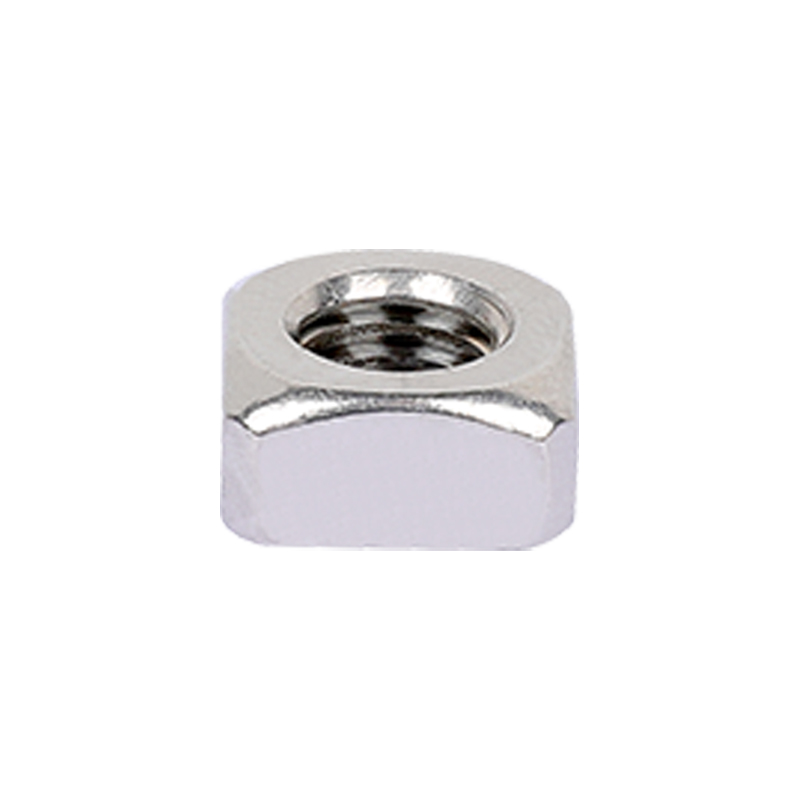
Before the hex nut took over, the square nut was everywhere. Hardware bins, factory floors, railway beds, furniture joints — four flat sides, simple geometry, nothing fancy about it. Then mass production got faster and more standardized, hex became the default, and the square nut quietly stepped back. Not out. Just back. It kept showing up in the places where its shape happened to solve a problem that nothing else solved quite as cleanly.
That shape is really the entire argument for square nuts. Four sides instead of six means more flat surface area in contact with whatever the nut is sitting against. Press one into a slot, a channel, or a routed cavity, and the walls catch it. The nut does not spin. You turn the bolt, the joint tightens, and the nut just sits there doing its job without needing a second pair of hands to hold it still. It sounds like a small thing until you have spent ten minutes trying to keep a hex nut from rotating in a tight spot with no wrench access, at which point it stops sounding small.
Furniture manufacturing figured this out early. Flat-pack joinery, timber framing, built-in cabinetry — anywhere a bolt has to draw two wood panels together, you need the nut to stay in position during assembly. Square nuts dropped into a pre-cut channel handle this without drama. No spinning, no fumbling, no second tool required. It is one of those solutions that feels almost too obvious once you see it working, and it is probably why the design has survived more than a century of competition from newer fastener formats.
T-slot aluminum framing systems are another place where square nuts genuinely earn their keep. These are the modular extrusion systems used to build machine guards, workstation frames, conveyor structures, and factory shelving that gets rearranged twice a year. The nut slides into the channel, a bolt engages it, and the connection locks. Want to move a bracket six inches to the left? Loosen the bolt, slide the nut, retighten. The whole structure can be reconfigured without tearing anything apart, and square nuts are central to why that works. For facilities that treat their floor layouts as ongoing experiments, that kind of flexibility is worth paying attention to.
Heavy infrastructure tells a slightly different story. Rail systems, bridge hardware, and older structural installations were often built with square nuts before hex became dominant, and a lot of that hardware is still in service. Maintenance crews encounter square nuts on a regular basis, which keeps steady demand in a market segment that does not get much coverage. There is also a load distribution argument worth mentioning — the wider bearing surface on a square nut spreads clamping force across more material, which matters in softer substrates where a smaller hex nut might dig in or deform over time under sustained pressure.
Material options have followed the applications. Standard low-carbon steel handles general indoor use. Stainless steel grades step in for wet, chemical, or marine environments. Brass shows up in electrical assemblies where conductivity or corrosion resistance takes priority. Hot-dip galvanized versions handle outdoor exposure without complaint. The shape stays the same; the material shifts to match the conditions. That adaptability is part of why specifying square nuts is less of a compromise than people sometimes assume.
Related Products

Copyright 2024 Zhejiang Wanyu Automotive Parts Co., Ltd. All Rights Reserved
Auto Fasteners Parts Factory

Contact Us