 English
 Español
Just write us your request & we will take care of the rest.
Which Double-Ended Studs Suit Heavy Machinery?
What Sets This Fastener Apart
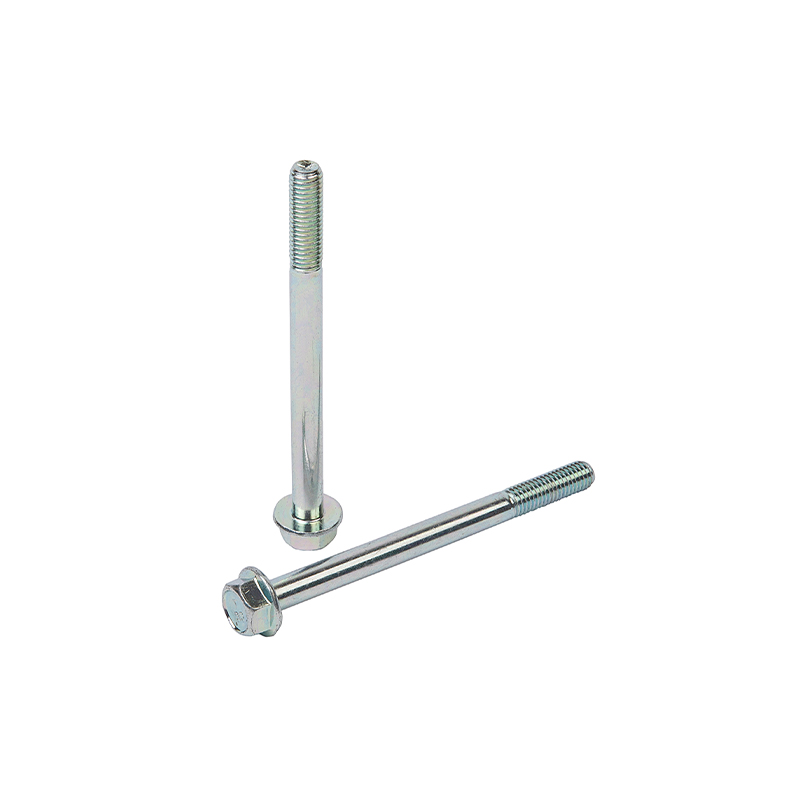
Unlike a standard bolt with a head on one side, a double-ended stud is threaded on both ends, often with an unthreaded or differently threaded section in the middle. One end typically screws permanently into a tapped hole or component, while the other end accepts a nut to secure a second part. This setup lets engineers join two pieces without needing access to both sides for a wrench, which matters in tight assemblies where clearance is limited.
Buyers sourcing this hardware usually care about a few core specifications: thread pitch, overall length, diameter, and the type of thread engagement on each end. Some studs use identical thread specs on both sides, while others are designed with different thread classes depending on what each end needs to grip.
Material Choices and What They Affect
Double-ended studs are produced from a range of materials, and the choice usually comes down to what kind of load and environment the fastener will face:
- Carbon steel for general-purpose applications with moderate strength needs
- Stainless steel where corrosion resistance matters more than raw strength
- Alloy steel for higher-load applications requiring greater tensile strength
Coating options layer on top of base material — zinc plating, black oxide, and similar finishes each change how the stud handles friction during installation and how it resists surface wear over repeated use. Buyers comparing suppliers often ask about coating thickness and consistency, since an uneven coating can affect thread fit during assembly.
Thread Engagement and Installation Style
The way a double-ended stud engages with its mating components shapes how it's actually installed on a production line. Interference-fit studs rely on a tight thread fit to stay seated in the base material without additional locking compound, while other designs pair with thread-locking adhesive for added security under vibration. Some studs also feature a coarse thread on one end for driving into softer base materials and a finer thread on the other end for precise nut engagement.
Installation tooling varies too — some studs are designed for wrench-driven installation using flats or a drive point, while others rely on a stud-driving tool that grips the unthreaded center section. Buyers working with automated assembly lines often specify a stud design that matches their existing tooling rather than adjusting equipment for a new fastener style.
Sizing and Where It Matters
Length and diameter ranges for double-ended studs span a fairly wide spread, since applications differ so much between light equipment assembly and heavier structural work. A shorter, smaller-diameter stud might suit an electronics enclosure, while a longer, thicker stud could be built for securing heavier machinery components. Buyers often work backward from the assembly itself, calculating the combined thickness of the parts being joined plus enough thread engagement to hold securely under expected load.
Common Applications Across Industries
Double-ended studs show up across a broad set of settings: automotive engine and exhaust assembly, industrial machinery construction, HVAC equipment, and general fabrication work where two components need a secure, repeatable threaded connection. Manufacturers producing equipment in these categories often standardize on a handful of stud sizes across product lines, which simplifies inventory even as the products themselves vary.
For distributors, that pattern of standardized sizing translates into predictable demand — once a manufacturer settles on a stud spec for a given assembly, reorders tend to follow the same pattern for the life of that product line, rather than shifting with every new order.
Related Products

Copyright 2024 Zhejiang Wanyu Automotive Parts Co., Ltd. All Rights Reserved
Auto Fasteners Parts Factory

Contact Us