 English
 Español
Just write us your request & we will take care of the rest.
Metal Stud Supports Machinery Links
Metal stud fasteners play a quiet but important role in holding mechanical parts together. Unlike bolts with heads, a metal stud features threads on both ends and no head in the middle. This simple form allows one end to screw into a threaded hole while the other accepts a nut, or both ends to receive nuts. The design creates clean, strong joints in places where traditional bolts would take up extra room or prove awkward to install.
Core Design of a Metal Stud
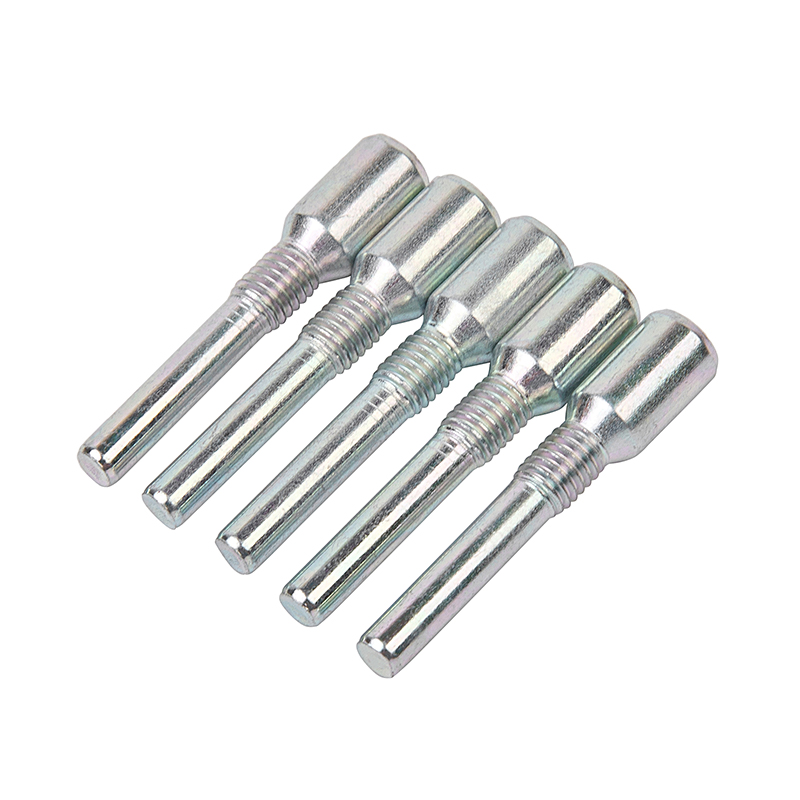
A standard metal stud has an unthreaded shank between two threaded sections. The thread lengths can match or differ depending on the intended use. Some versions include a shoulder, a slightly wider section that helps locate parts or control how far the stud seats. Materials often include carbon steel or stainless grades that resist everyday wear and corrosion in typical operating conditions.
The absence of a head keeps the profile slim. This proves helpful in crowded assemblies where clearance is limited. Threads are cut or rolled with care so they engage smoothly with matching nuts or tapped holes. Chamfered ends make starting the threads easier during installation.
Common Types and Their Roles
Several metal stud styles appear regularly in mechanical work. Double-ended studs with equal thread lengths on both sides suit through-hole connections where nuts tighten from each end. Versions with unequal threads, sometimes marked by ratios such as 1.25 times the diameter on the shorter end, allow one side to seat firmly into a tapped hole while the longer side accepts a nut.
Shoulder-type double-ended studs add a stepped section that acts as a stop or alignment feature. Specialized forms serve particular spots in engines and chassis. Examples include studs designed for oil pumps, thermostat housings to cylinder blocks, oil rails, intake and exhaust manifolds, and front or rear suspension points. Each variation matches the space, load direction, and access needs of its location.
These forms share the same basic idea: create a durable threaded connection without the bulk of a bolt head.
Practical Applications Across Systems
In vehicle engines, metal studs secure cylinder heads, manifolds, and accessory housings. The stud stays fixed in the block or head while the attached part slides over it and a nut clamps everything in place. This arrangement simplifies removal of the outer component without disturbing the stud itself.
Suspension systems use metal studs to link control arms, struts, or related brackets. The design handles repeated loads from road surfaces while allowing service access when needed. Other machinery, from industrial equipment to smaller mechanical assemblies, relies on similar studs for flanges, covers, and structural joints.
The ability to install the stud once and then attach or detach parts with a nut alone speeds assembly lines and field work. In confined engine bays or compact frames, the slim profile avoids interference with nearby hoses, wires, or moving parts.
Advantages in Everyday Use
Space efficiency stands out as a clear benefit. A metal stud leaves more room around the joint than a bolt of similar strength. Disassembly becomes straightforward: loosen the nut and lift the component free. Reassembly follows the same path in reverse.
Load distribution works well because the stud can be seated firmly before the final clamping force is applied. This reduces the chance of cross-threading the main component during repeated service. Different lengths and diameters let designers match the stud to the thickness of the parts being joined and the forces involved.
Storage and handling stay simple. Studs take less space in bins than headed fasteners of comparable size, and they can be organized by thread diameter and overall length for quick selection on the shop floor.
Related Products

Copyright 2024 Zhejiang Wanyu Automotive Parts Co., Ltd. All Rights Reserved
Auto Fasteners Parts Factory

Contact Us